Interview with Dr. Jan Glöckner – How Gong Fu tea brewing became a method for education and conversation
Interview with Dr. Jan Glöckner – How Gong Fu tea brewing became a method for education and conversation. We’ve discussed how and why this method was created, and what is Jan doing now.
tata asks questions
12/17/20254 min read
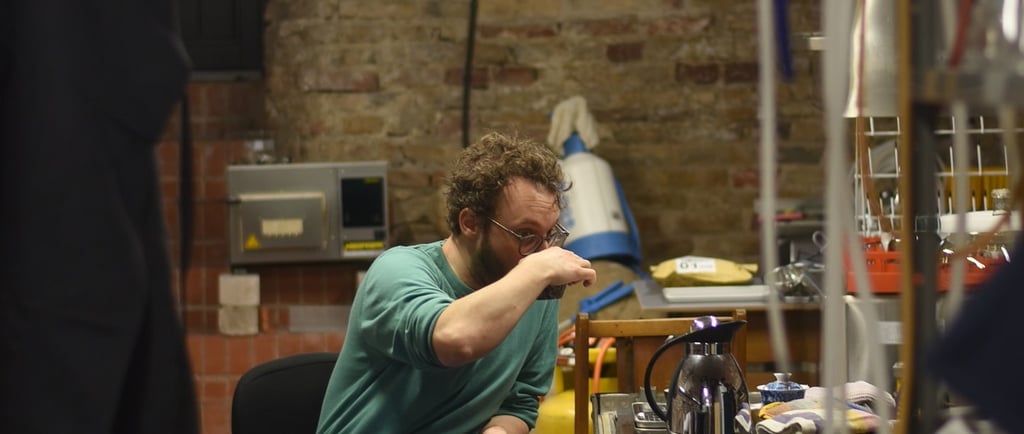
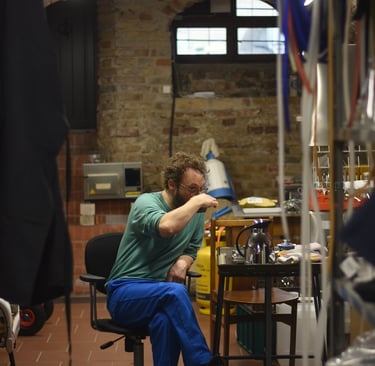
Tata Frenkel: Jan, it’s time for you to answer all the questions. I will be very to the point with them. So what is your current interest, in your research or other work?
Jan Glöckner: I have many interests. Currently I am into the effect of different minerals in brewing water on tea taste, pressure management in underwater-bioreactors, quantization of random events in music, microtonality and different musical scales, also rhythm vs. melody. Just to name what a few.
Tata: Mostly I want to interrogate you now about the Gong fu brewing as a method for education and conversation. When did you come up with such method?
Jan Glöckner: I think that was in 2020-21.
TT: You’ve established the field of artistic biotechnology, and you were researching fungi choreography, so I believe the question is – in this context of your research, what was the initial reason for such method for education and conversation to appear?
Jan Glöckner: I had experience being a lab gremlin assisting in teaching art students the principles of microbiology, and I saw the deficienty of fundamental knowledge in students. When I started later to teach myself, I thought that’s the first thing to mitigate. To bring everyone up to speed, while not boring to death the ones who have knowledge. Since art and design students do not necessary specialize in natural sciences (I guess if they would then they wouldn’t be art students, although I had by now some students that did their undergraduates in life sciences etc.), they all come from diverse knowledge backgrounds. I needed a method to include all those backgrounds. At this time I was already a tea drinker of 20 years, but I only drank japanese green teas. I finally got myself a Gaiwan, and started exploring all the wonderful wulongs and post fermented teas, and haven’t had much japanese ever since. As I was exploring, I thought: Hey that’s actually a great, tangible and fun way to literally taste biotechnology. So I used it with great success to teach.
Tata: So you’ve been doing it already for awhile... Where have you already presented this kind of workshop/lecture?
Jan Glöckner: I was in a couple of festivals, and universities. Vilnius Art Academy of course, Vilnius University, Riga Technical University, Ars Electronica in Austria and I was invited by Gudskul to participate in documenta 15.
TT: What are the most frequent topics during the Gong fu brewing as a method for education and conversation?
Jan Glöckner: I think most frequent is the topic of creating a communal safe space for learning through the sharing of tea. Learning environments is something that’s close to my heart, since my school times were straight out of 1960s TV movies, including the caricatures of teachers. I think people should feel safe and relaxed, when you are bored or frightened, you cannot learn. Another topic is that biotechnology is nothing new, not complicated, nothing fancy, and nothing to be afraid of. It CAN be all that, but most of the time it is not.
Tata: How would you sum up gong fu tea process, in your words?
Jan G.: Don’t be stingy, put lots of leaves! Enjoy yourselves, indulge! And while you do it, relax your brain, then it will puzzle all the pieces together by itself.
TT: Exactly. Also, I love your view on education, how would you describe what is important to you when working with students, in either formal or informal settings?
Jan G.: I am a person who gets bored easily. So I have to entertain myself, that’s why I do not repeat myself. If the teacher is entertained, fair chance students are too. And the most important thing, take your students seriously. Respect them. Meet them on your eye level. Chances are high that they are smarter than you! Also, have fun!
Tata: What are usually the participants doing? Do they need to have experience in gong fu, or tea culture in general?
Jan G.: Depends on the time frame, sometimes participants just sit and enjoy tea while I yap, or they brew themselves, or when we have enough time they become detectives and have to figure out what tea I give them, by using clues and their sensoric array. Humans are walking talking chemistry laboratories, you just have to know how to work it.
Tata: Ok, could you share what is your current interest in tea research, apart from such educational format?
Jan G.: I really got into water, my current research is simulating water. That means you take distilled water and add minerals. Simulated because this water might not exist in this composition somewhere on earth. I have a hypothesis that every tea can have a perfect simulated brewing water that highlights all its aromas. While I understand water composition for greens and wulongs, post fermented teas are very challenging. The possibilities for water composition are endless. Or to say it in other words: Together with brewing times, temperatures and vessels, and vessel materials, water composition adds another hundred of set-screws to the arsenal of the tea researcher.
TT: What’s your unpopular opinion about tea preparation?
Jan G.: I have a few! I totally do not subscribe to all the wellness mysteries and medical claims around drinking tea. All this talk about mindfullness annoys me, and the fetishizing of asian cultures in the western world is something I really hate. Just enjoy your tea, for f*** sake!
TT: Do you like working with me?
Jan G.: Best thing that happened to me!
TT: Thank you for spilling the beans.
Chaiculator
hello@chaiculator.com
© 2024. All rights reserved.
MB Chaiculator
Maisto tvarkymo subjekto kodas: 130023542
B2B, business partnerships and tea for EVENTS contact: hello@chaiculator.com